A Pavillon 54 perspective
Did you catch what happened at the US Open last month? During Naomi Osaka’s first-round match, play was actually paused mid-point because a group of influencers in a suite were so loud and so lit up with ring lights that the chair umpire had to stop and ask them to sit down. It wasn’t an isolated moment, either. The USTA handed out nearly 100 influencer credentials this year, almost double what it gave out in 2025. By the end of the tournament, players like Jessica Pegula were publicly saying enough is enough. Wimbledon took note and decided to ban ring lights there starting next year.
Watching it unfold, we couldn’t help but think: this is a very familiar argument, just dressed in tennis whites instead of gallery lighting.
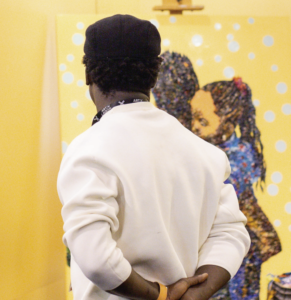
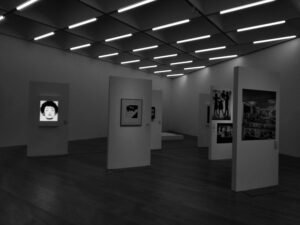
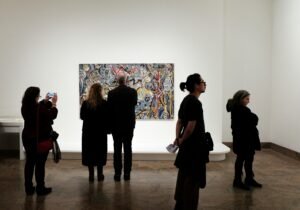
Over the past few years, art fairs and major galleries have thrown their doors wide open to content creators, fashion influencers, lifestyle bloggers, or anyone with a following, really, hoping some of that audience sticks around and starts paying attention to art. And in a lot of ways, it’s worked. But if you’ve been to a preview night recently and found yourself waiting behind someone doing a slow, deliberate outfit spin in front of a painting, you’ve probably felt the same friction tennis fans are talking about: at what point does welcoming people in start crowding out the thing you invited them in to see?
Two things can be true at once
Here’s the honest version of this: social media has genuinely opened art up to people who would never have walked into a white-cube gallery on their own, and that’s a real, good thing. An artist who spent a decade showing in small spaces to a handful of people can now have a single photo reach more people in a day than they’d have reached in years. Nobody serious in this industry wants to go back to a world where art only speaks to the people already in the room.
But something does shift when the influencer becomes the main character and the artwork becomes the backdrop. We all have seen someone posing in front of a huge canvas, outfit perfectly colour-matched to the painting, more focused on the angle of their chin than on what’s actually hanging there. The work itself, the years it took, the ideas behind it, whatever the artist was actually trying to say, gets flattened into wallpaper. And in a world that runs on provenance and story and nuance, that flattening isn’t a small thing.
Why it hits differently for African and diaspora art
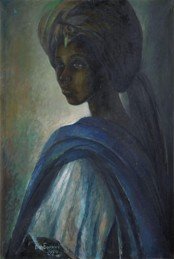
This isn’t just an abstract debate for us. For African and diaspora artists, a lot of what’s being shown right now carries real weight, such as identity, migration, memory, histories that took generations to even get noticed by major institutions. These aren’t just striking images. They’re often the point of the work.
So when a piece dealing with topics that are genuinely heavy, like displacement, colonial history, grief, etc. gets reduced to a cute backdrop for a 15-second clip with a trending sound over it, something real is lost. Not because people are taking photos, but because the photo becomes the whole encounter, instead of the start of one.
So what’s the actual fix?
Honestly, not banning phones or going back to hushed, exclusive gallery culture. Nobody wants that, and it wouldn’t work anyway. Digital platforms are genuinely how a lot of people discover African and diaspora art today, Pavillon 54 included.
The difference is in how people use the space. The creators doing this well don’t just stand in front of a painting and pose. They actually talk about what they’re looking at. Who the artist is, what the piece is about, why it matters. That’s content too, and it’s the kind that actually grows an artist’s audience instead of just borrowing their wall for a backdrop. On the flip side, a bit of basic courtesy goes a long way. The same way a tennis crowd knows to go quiet before a serve, art lovers deserve a moment to actually look at a piece without someone’s ring light in the frame or a five-minute shoot blocking the view.
Where we land on this
We’re not precious about phones in galleries. We post, too. What we care about is the order of operations: look first, then share. Not the other way around. Read the wall text. Ask a question if there’s someone around to ask. Let the work actually land before you decide how to frame it.
The best thing an influencer, or any of us, can do for African and diaspora art right now isn’t to go viral in front of it. It’s to actually care about what they’re looking at, and let that show in what they post.
Heading to an art fair or gallery opening this season? Tell us what can be done to curb this phenomenon, also take the photo – just take a minute with the work first, too.