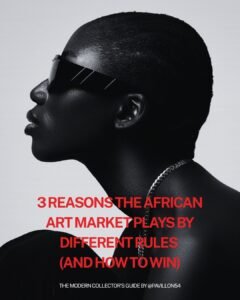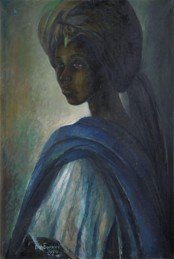

A visual representation of contemporary African portraiture and digital creative expression.
Look around the global cultural landscape today, and one thing is undeniable: African and Diaspora creativity is the world’s ultimate engine. From avant-garde textiles gracing European runways to the bold visual languages dominating international art galleries, Black culture dictates the global mood board.
But beneath the celebration lies a sharp, historical tension. There is a massive difference between having influence and having equity.
While the world has always been quick to consume, mimic, and be inspired by this creative expression, the financial monetization of that genius has historically been gatekept by external forces. Today, with the hyper-visibility of social media, this extraction has shifted from a physical threat to a digital blueprint. For contemporary artists and creators, the internet is no longer just a gallery-it is a landscape where your intellectual property can be mined in real-time.
The Modern Digital Trap: We’ve Seen This Before. It Was Called Cubism.
A Black woman popularizes a way of painting the face. A more powerful name absorbs it, refines it, brands it, and files the paperwork to own the words for it. The internet keeps calling the Patrick Ta situation new. It’s one of the oldest stories in art.
Ngozi Edeme – Painted by Esther – turned the gradient “transition blush” into a movement, glowing up the temples and under the eyes on skin from Olandria Carthen to SZA to Doechii. Then Patrick Ta Beauty dropped a “Transition Blush” line – and it emerged that the brand had quietly filed to trademark the phrase a year before launch. He’s since apologized. But here’s what the lawyers say: you can’t trademark a technique, only the name – so whoever owns the words owns the credit.
Now rewind a century. A young Spanish painter walks into a Paris museum, sees a room of African masks, and walks out with the blueprint for Cubism. The masks’ makers got a wall label: Anonymous. Picasso got a movement named after him.
Swap the museum for an algorithm and the mask for a blush brush, and you’ve got Esther. Swap it for an album title and you’ve got Meek Mill, watching Nike print his Dreams and Nightmares across a LeBron shoe.
The tools change. The trademark is just the new wall label – and the fight to get a name back onto the work is the oldest fight in art.
From Artifacts to Algorithms: The Continuum of Extraction
This disconnect between creation and monetization isn’t a new digital phenomenon; it’s a centuries-old pattern. Historically, the global art market was built on a cycle where African creative genius was extracted—whether through the physical removal of historical artifacts that now anchor multimillion-dollar foreign museum collections, or the uncredited emulation of traditional forms by Western modernists. In those dynamics, the original creators and their communities rarely saw a fraction of the generational wealth generated.
Today, that same script has simply gone digital. The physical raids of the past have been replaced by the quiet analytics of the digital space. Corporations and major brands no longer need to cross oceans to extract value; they just need to scroll through your social media feed, treat your cultural expression as a free public commodity, and reverse-engineer it for profit.
Three Warning Lessons for Contemporary Creators
Whether you paint on canvas, sculpt, or design textiles, you must treat your work as intellectual property, not just personal expression. To protect your practice from modern digital commodification, consider these guardrails:
- 1. Guard the Mechanics of Your Process: Social media demands transparency, and audiences love “Behind the Scenes” content. However, showing the exact step-by-step application of how you mix a specific pigment, layer a textile, or manipulate a digital tool allows larger entities to replicate your aesthetic instantly. Share the story and the inspiration, but keep the exact technical recipe private.
- 2. Vet Corporate “Admirers” Critically: When a brand, gallery, or larger platform reaches out to “collaborate” or feature your studio, look closely at the boundaries. Are they compensating you for your intellectual capital, or are they trying to extract your techniques and access your audience for free? Never allow anyone to document your precise creative steps without a formal agreement and proper compensation.
- 3. Learn the Language of Intellectual Property: Corporations dominate the market because they understand the legal framework of ownership. Independent creators must match that literacy. Understand how copyrights, trademarks, and design protections apply to your specific field. If you create a highly distinct visual series or stylistic title, look into securing it legally before someone else flags it as “unclaimed.”
Redefining the Future of Ownership
At Pavillon 54, our perspective is shaped by these ongoing shifts. We believe that true appreciation of contemporary art requires a protective, analytical ecosystem where creators are acutely aware of their worth and shielded from systemic extraction.
It is no longer enough to be the world’s muse, praised only for our cultural influence while others hold the ledger. The aesthetic belongs to the creator—and it is time to ensure the equity does, too.