As the 2026 World Cup heads into its final, the intensity on the pitch is palpable. While the tournament brackets may no longer feature African teams in these closing rounds, looking strictly at the scoreboard misses the grander narrative. Long before the semi-finals were decided, a completely different victory had already been claimed. It wasn’t won with tactical formations, but in the arrival terminals, on the backs of millions of fans, and through a brilliant display of wearable heritage.
Football across Africa and its diaspora has never been just a game; it is a shared language, a collective rhythm, and a fierce declaration of identity. When a fan pulls on a national team jersey, they aren’t just backing eleven players—they are wrapping themselves in their country’s history, struggles, and triumphs. When fine art and intentional fashion inject themselves into sports culture, they supercharge this sense of national pride. It transforms a standard athletic uniform into a badge of cultural sovereignty, giving communities a visually stunning way to say: This is who we are, and this is how we choose to see ourselves.
Defying the Narrative: On-Pitch Triumphs and Cultural Resonance
This unapologetic presence perfectly mirrored the fearless performances on the pitch. Over the last few weeks, African nations didn’t just participate in the World Cup; they completely disrupted the traditional, Eurocentric hierarchy of global football, sparking an electric wave of pride across the continent and its global diaspora.
Take the stunning, historic run of Cape Verde. A tiny island nation of half a million people, the “Blue Sharks” captured the world’s imagination with a masterclass in heart, discipline, and unity. For the global Cape Verdean diaspora—stretching from New England to Lisbon—watching their team out-play global giants wasn’t just an athletic thrill; it was a profound moment of visibility. It projected their distinct Creole heritage, music, and flag onto the world’s biggest stage, proving that brilliance is never defined by geographic size.
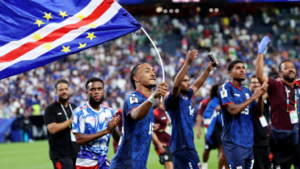
- Small island, global giant: Cape Verde celebrating an unforgettable, narrative-shattering performance that united their global diaspora. Source: BBC Sport
Simultaneously, Morocco solidified their status as an absolute global powerhouse. A few years ago, traditional football pundits would have dismissed the idea of the Atlas Lions consistently dominating the world’s elite squads as an impossibility. Yet, through structural excellence and a brilliant, fluid style of play, Morocco proved that their historic success is no fluke—it is the new reality.
This meteoric rise does something deeply powerful: it shatters the old, tired “underdog” trope. Morocco and Cape Verde didn’t just ask for a seat at the table; they rewrote the rules of the game.
This exact dynamic is what makes the parallel to contemporary African art so profound. Just as these athletes are dismantling old hierarchies on the grass, contemporary African and diaspora fine artists are completely disrupting the traditionally Western-dominated gallery spaces and auction houses. Both fields are boldly reclaiming the right to tell their own stories, on their own terms, forcing the global stage to look, listen, and revere.
Runway at the Runway: The Virality of Arrival Style
The tone for this cultural victory was set before a single ball was kicked. The arrival of the African delegations turned international airport terminals into high-fashion runways, commanding global attention for their unapologetic celebration of indigenous design.
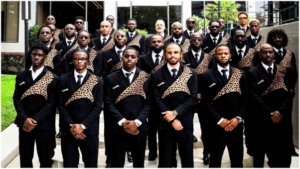
Dressed to conquer: The DR Congo squad bringing the spirit of La Sape to the 2026 World Cup with custom leopard-motif suits by Alvin Mak. Source: Reuters
Leading the charge was the national team of the Democratic Republic of Congo (DRC), whose arrival look immediately became one of the most talked-about style moments of the entire summer. Stepping off the plane, “Les Léopards” bypassed generic, uninspired corporate tracksuits in favor of custom-tailored suits featuring asymmetrical, luxury velvet leopard-print panels cutting across the chest. Designed by Paris-based Congolese designer Alvin Mak (founder of JMAKXPARIS), the look was styled with matching custom luggage and gold leopard brooches clutching miniature pearl footballs.
Mak’s designs directly channeled the legendary Congolese tradition of La Sape (the Society of Ambiance-Makers and Elegant People)—a movement where dressing dapper is elevated to a philosophy of defiance, elegance, and joy. In Congolese culture, the leopard is a historic symbol of power, majesty, and royalty. By stepping out in these garments, the squad carried the literal and spiritual armor of their homeland onto the world stage, asserting their national pride with every step.
They weren’t isolated in this sartorial triumph. Côte d’Ivoire arrived in striking, cropped batik-dyed jackets made of traditional Tapa cloth by local designer Ibrahim Fernandez, featuring an ornate embroidered elephant head on the back.
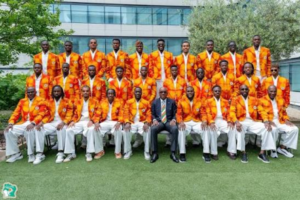
Source: Reuters
Conclusion: A Masterpiece in Motion
Why does this cross-over matter to the global art community? Because it completely reimagines where fine art and cultural value belong. Art does not need to be confined to pristine, white-walled galleries or exclusive auction houses to shift global mindsets.
The tournament will reach its final whistle in the coming days, the stadium lights will turn off, and a single team will lift the trophy. But the cultural shifts achieved by these teams cannot be undone. The garments they wore and the barriers they broke will endure. They will be worn by a teenager in London, a street vendor in Accra, an art collector in New York, and a kid practicing footwork on a pitch in Praia or Casablanca. They democratize the canvas, turning a simple sports uniform into a piece of lived, moving history. The beautiful game isn’t just a sport—it is contemporary art in motion.