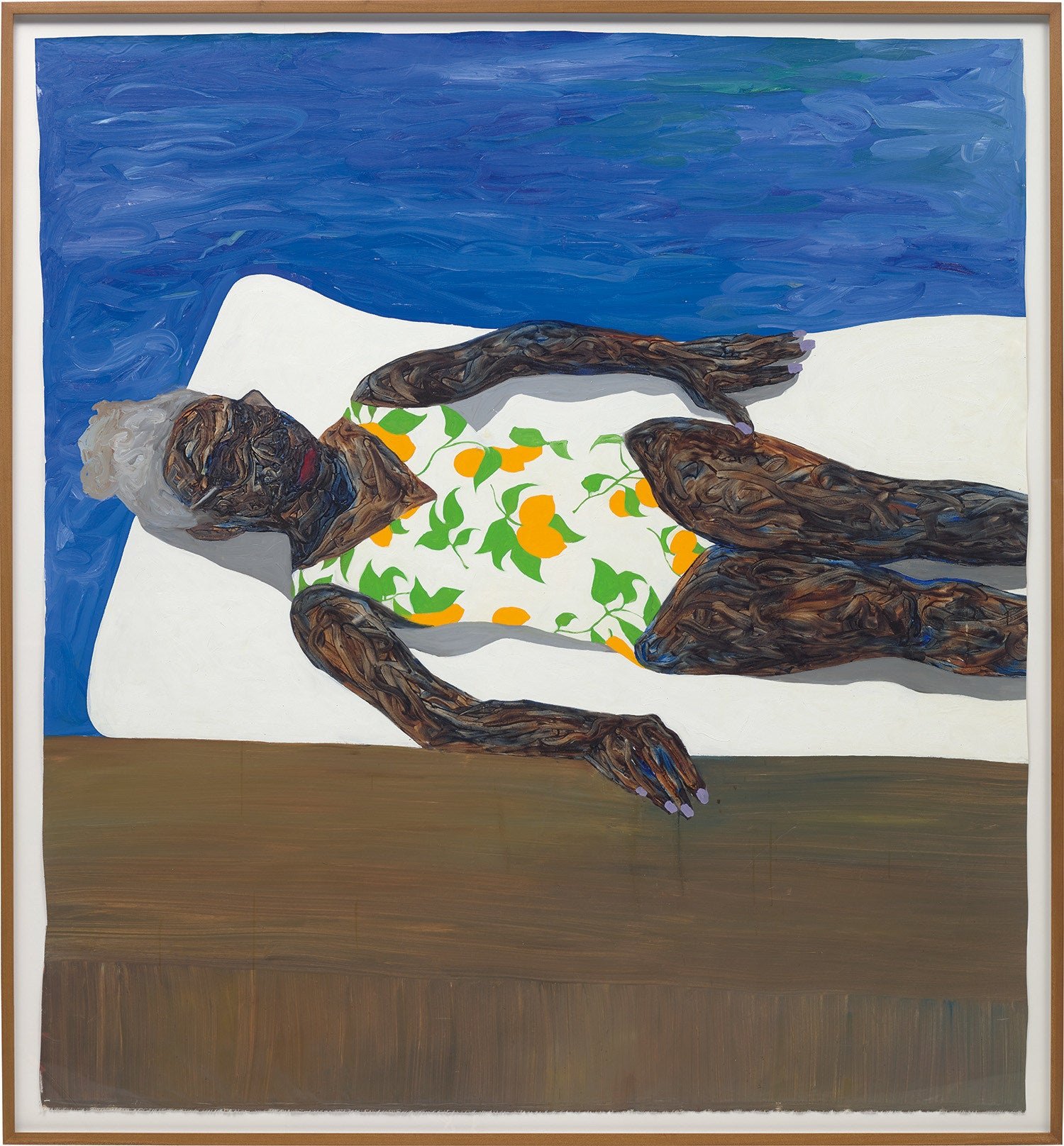
Amoako Boafo, The Lemon Bathing Suit, 2019. Oil on unstretched canvas. Sold at Phillips London, February 2020, for £675,000 ($881,000). Image courtesy the artist and Phillips.
In 2020, a painting by a then little-known Ghanaian artist named Amoako Boafo sold at its auction debut in London for about $880,000, roughly thirteen times what the auction house expected. Here’s the part that should make you sit up: someone had bought that same painting months earlier for a tiny fraction of the price. Overnight, art looked like the easiest money in the world.
Then came the hangover. By 2024, works by the very same artist were struggling to find buyers at all. The speculators who had raced the prices up had simply moved on to the next name. This wasn’t unique. An entire wave of hyped emerging painters over the past decade saw their prices collapse. Some lost as much as 90% of their peak value.
So let’s be honest before you spend a single dime: art can quietly destroy money just as easily as it builds it. Here’s why it’s harder than it looks.
There’s no ticker. A stock has a price you can check every second. A painting is worth whatever the next person will pay – and you often won’t know that number until you try to sell.
It’s illiquid. You can sell shares in an afternoon. Selling a painting well can take months, and selling it fast usually means selling it cheap.
The headlines lie to you. You see the record-breaking sales because those are the ones that make the news. But according to the Art Basel and UBS Global Art Market Report, works priced under $50,000 make up about 95% of all auction transactions. The million-dollar lots you read about? Less than 1% of the market. The glamour is real, but it’s rare.
Now the good news – because this isn’t a warning to stay away. It’s an invitation to do it right.
African art has been one of the more resilient corners of this market. When global art sales fell hard in 2023, the value of African art dropped by only about 8.4% – roughly half the decline of the broader modern and contemporary market. The collector whose net worth is genuinely built on art will tell you the same thing: art rewards the people who do the homework and punishes the people who chase hype.
The difference between a great investment and an expensive mistake is almost never luck. It’s research. And in the next piece, we’ll show you exactly what that research looks like.
Thinking about your first acquisition and not sure where to start? Pavillon 54’s advisory team helps first-time buyers make confident, well-researched decisions. [Get in touch.]